
The standard in mind.
The distinction in the detail.
Product character. Considered against the specification.
Quality takes shape through a series of connected decisions: the material selected, the construction followed and the attention given to the finished garment. Centrodot connects buyer requirements with manufacturing follow-up, keeping the agreed product reference at the centre of the conversation.
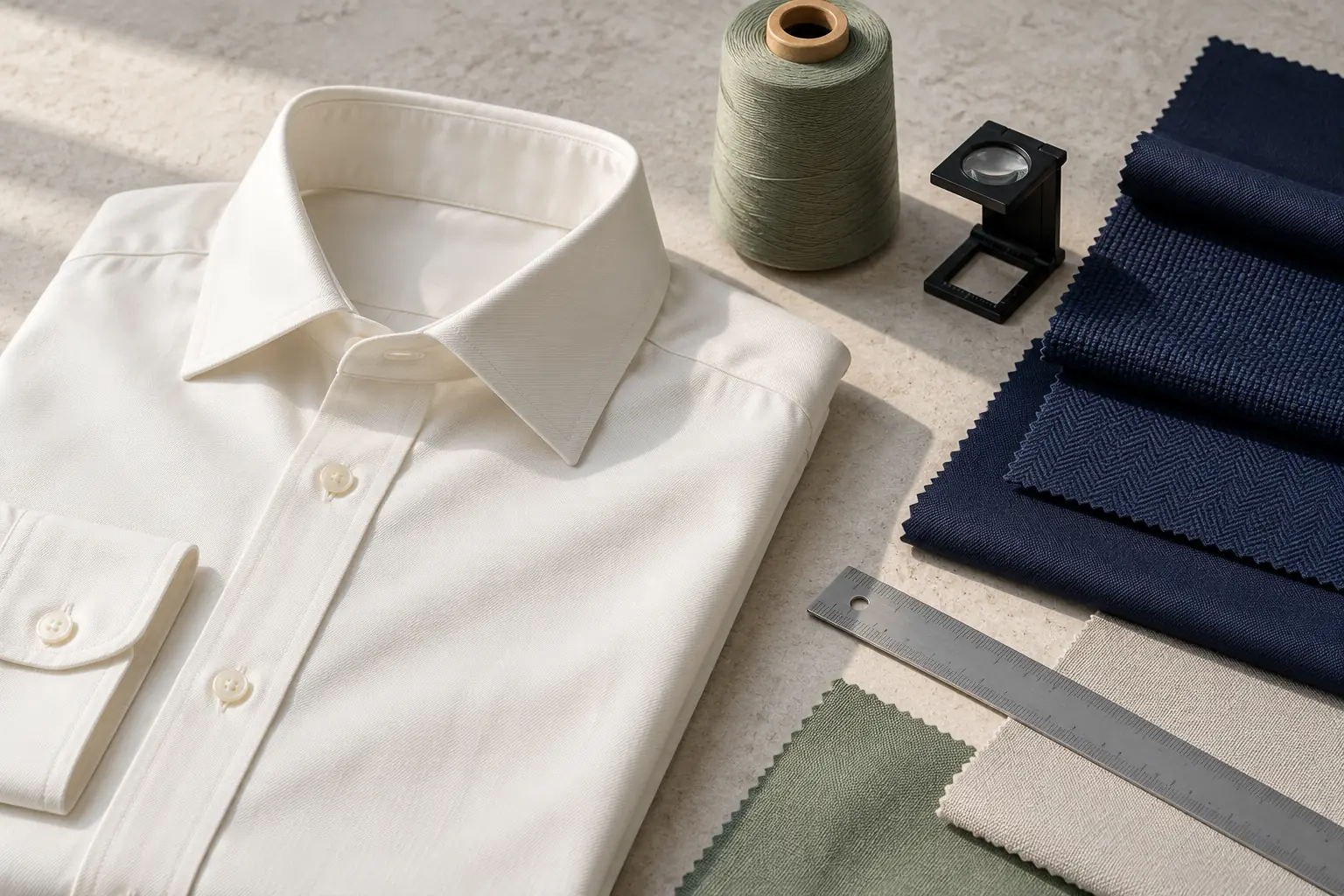
A clear expectation.
A consistent point of comparison.
The buyer’s specification, approved samples and relevant comments establish the product reference. Material requirements, measurements, construction details and presentation instructions give quality follow-up its context throughout development and bulk manufacturing.
- Material requirements
- Measurements & fit
- Construction detail
- Testing coordination
- Inspection follow-up
- Final presentation
The material foundation.
The intended proportion.
Fabric character and garment dimensions influence both appearance and function. Quality follow-up begins with a shared understanding of the approved material direction, measurement requirements and product comments that manufacturing needs to carry forward.
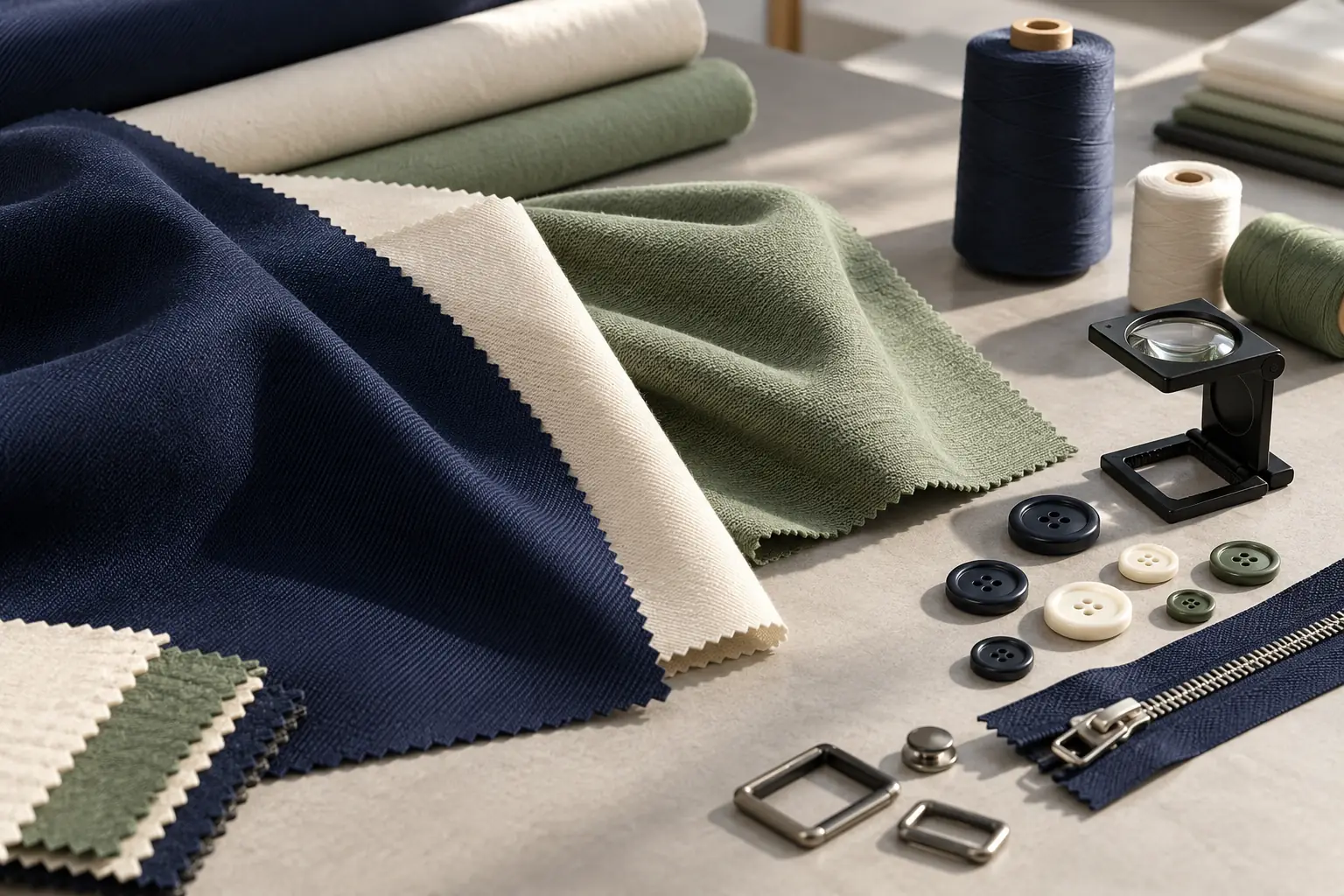
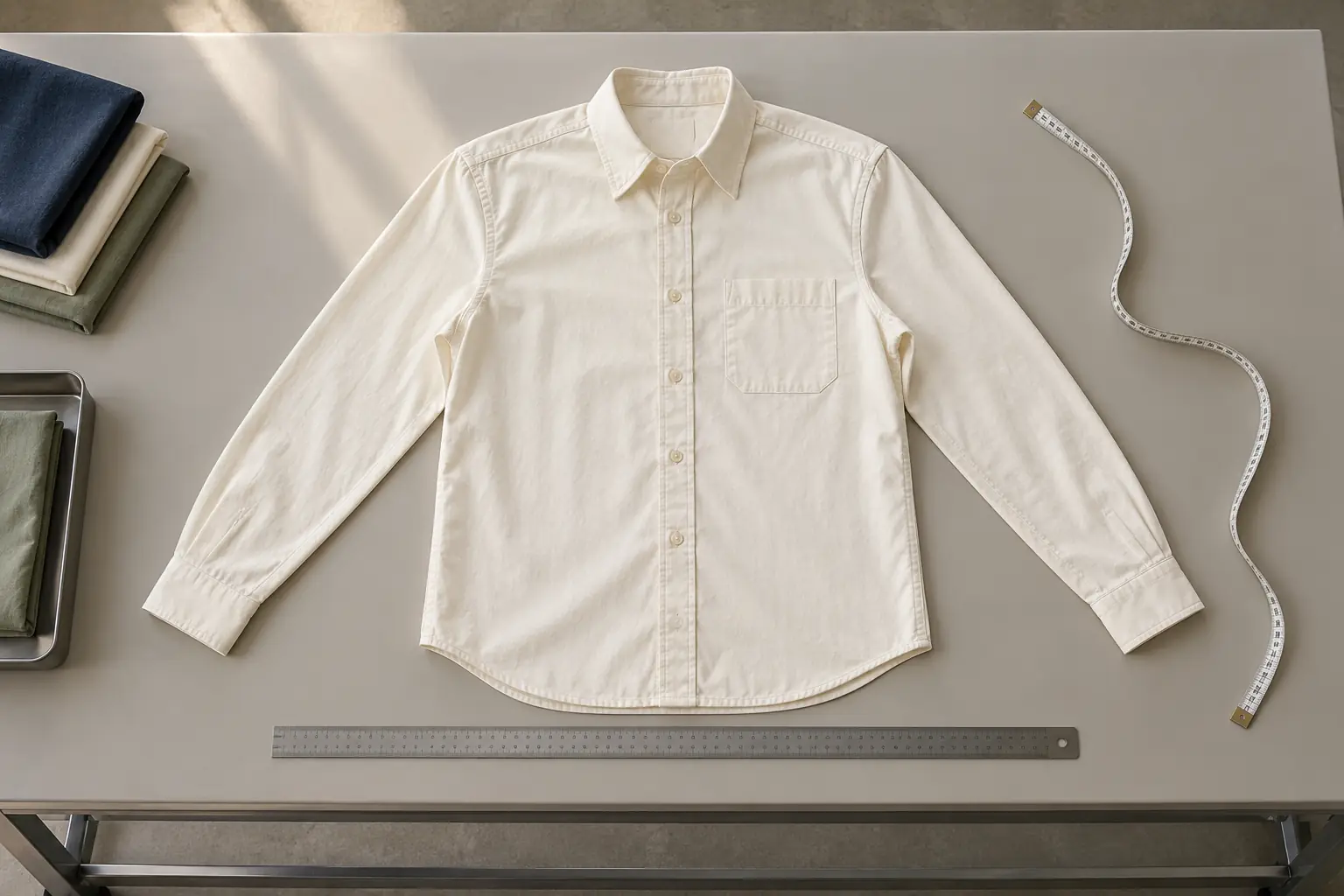
The materials behind the garment
Fabric appearance, shade references, surface character and component details are considered against the agreed requirements. Observations involving fabrics, trims or accessories are discussed with the relevant manufacturers and buyer where a decision is needed.
Proportion against the reference
Measurements are considered against the buyer’s stated points of measure and tolerances. Fit comments and approved sample revisions provide further context, with discrepancies brought into the product discussion for clarification and follow-up.
The visible detail.
The requirements beneath it.
A garment’s character is expressed through its construction, while its intended use may introduce specific performance and testing requirements. Centrodot connects those expectations with manufacturer follow-up and the relevant testing arrangements for the programme.

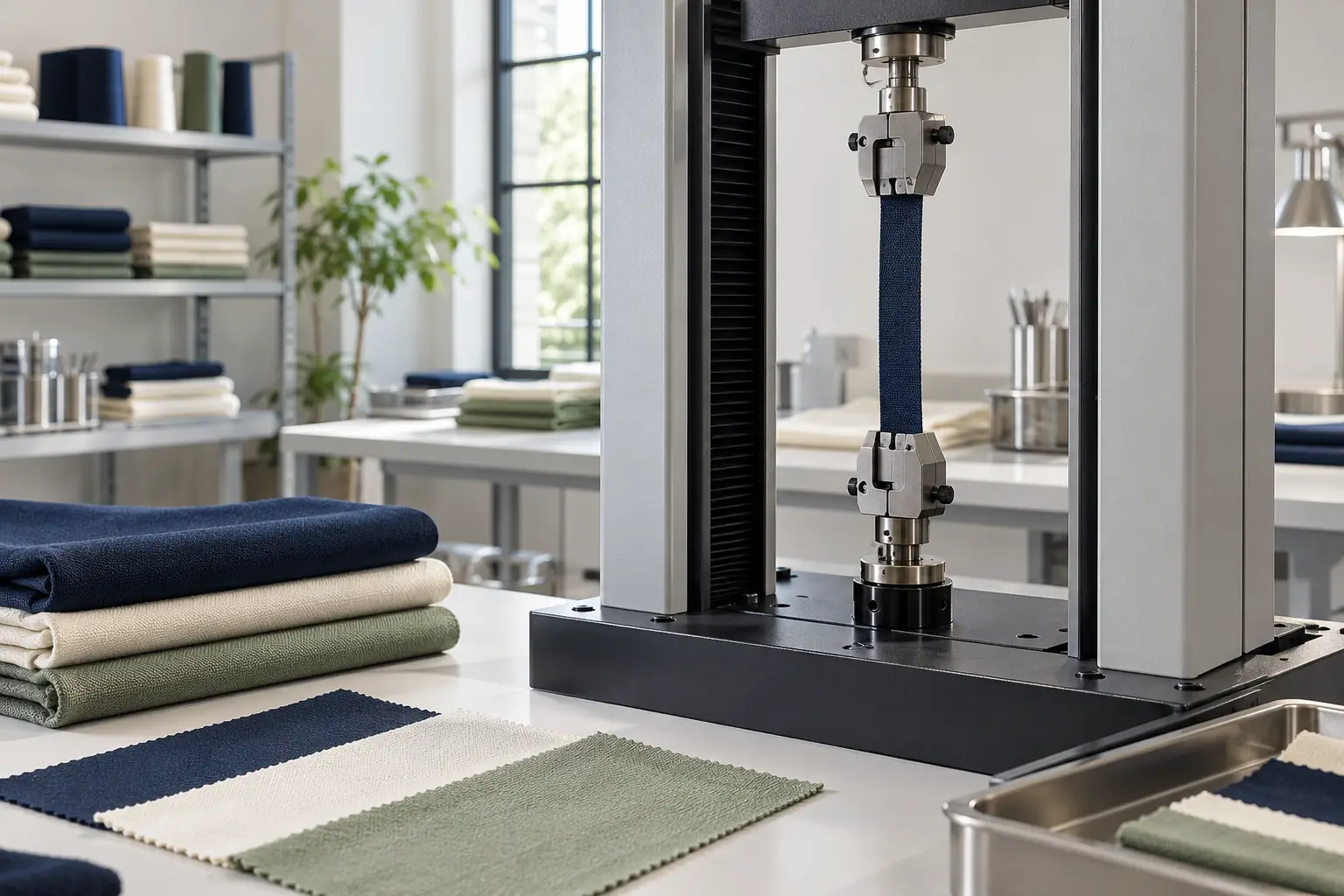
The integrity of the detail
Seam appearance, stitching, buttonholes, attachments and finishing details are reviewed in relation to the product specification and approved reference. Observations are communicated with sufficient context to support an appropriate manufacturing response.
Evidence within the programme
Where testing is required, Centrodot coordinates relevant submissions and follows report availability with the responsible parties. Test scope, applicable requirements and acceptance criteria are established for the product and intended market; specialist testing is undertaken by the relevant laboratory.
A broader product view.
A considered final presentation.
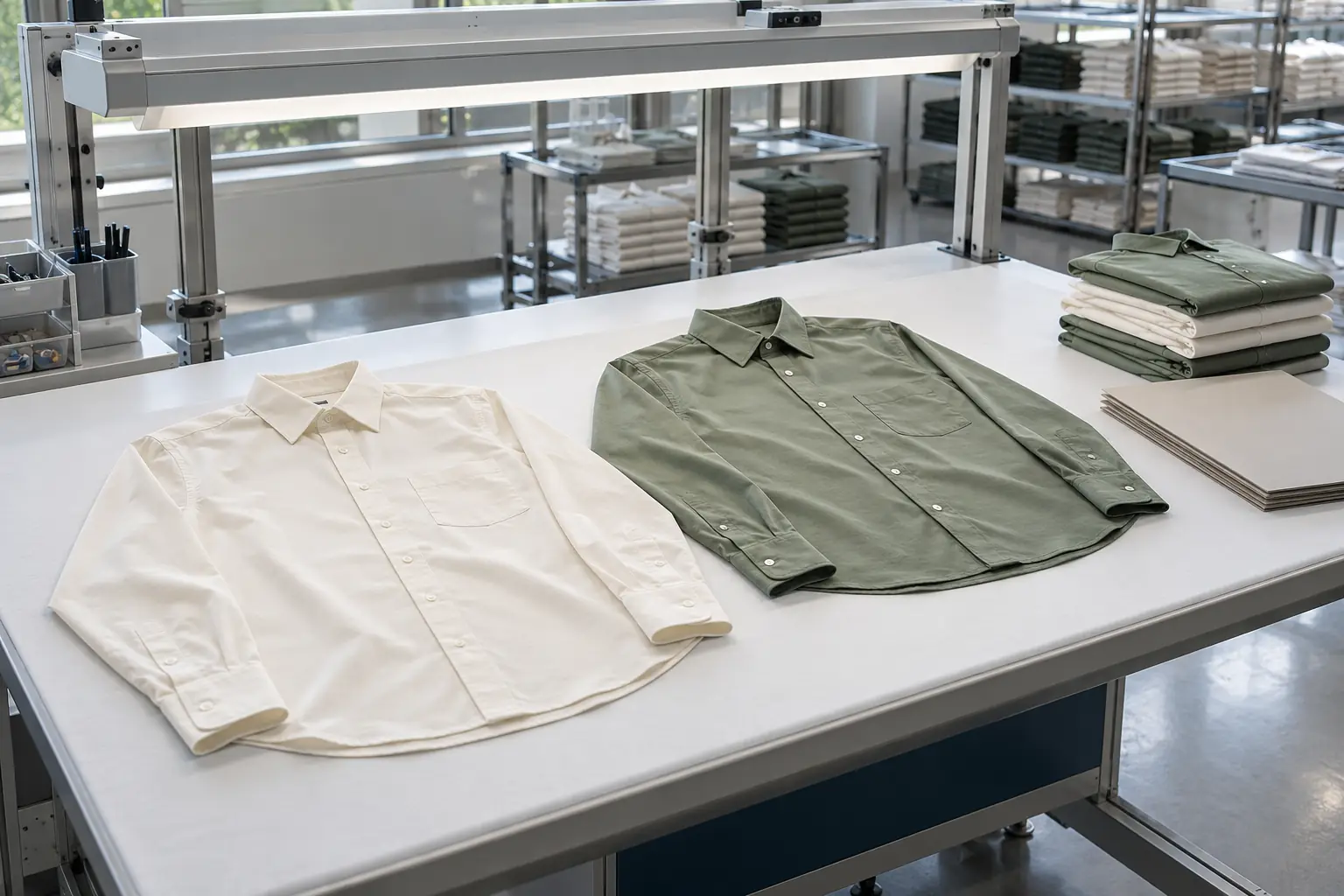
Checks during manufacturing and at the finished-product stage provide different views of the garment. Findings are considered alongside agreed inspection arrangements, product requirements and the information needed for the next programme decision.

Inspection & findings
In-line and final inspection findings are reviewed against the approved sample and buyer’s specification. Defect descriptions, affected quantities and supporting records guide follow-up with the manufacturer. Third-party inspection is coordinated where specified, with corrective actions and outstanding decisions communicated to the responsible parties.
Presentation & packing
Finished garments are reviewed for appearance, folding, labels and agreed size and colour assortments. Packaging, carton quantities and shipping marks are considered against the packing instructions. Findings are recorded and followed up with the manufacturer, keeping presentation and packing requirements connected to the final product review.
Quality in progress.
Improvement through evidence.
Defect information becomes useful when it informs a decision. The following established methods explain how manufacturing teams can monitor findings, investigate recurring problems and sustain improvements. Their application depends on the manufacturer’s systems and the requirements agreed for each programme.
DHU / Defects per hundred units
Tracks defects per hundred inspected units, including multiple defects within a single garment.
Traffic-light monitoring
Visual signals distinguish routine monitoring, review and escalation according to the factory’s procedure.
Six Sigma
DMAIC provides a sequence for defining a problem, examining evidence and checking that an improvement is maintained. It can support investigation of recurring measurement variation, workmanship findings or material inconsistency where suitable data and expertise are available.
- DefineClarify the issue and scope.
- MeasureEstablish a reliable baseline.
- AnalyzeInvestigate contributing causes.
- ImproveTest and implement changes.
- ControlMonitor and sustain the result.
Kaizen & PDCA
Kaizen encourages incremental improvement in daily work. PDCA offers a repeatable way to test a proposed change, review what happened and carry useful learning into standard practice.
- PlanIdentify a change to test.
- DoTry it on a suitable scale.
- CheckReview the evidence.
- ActAdopt, adjust or repeat.
Practical controls.
A developing technical landscape.
Organised workspaces and simple physical controls support prevention at source. Digital inspection and quality records can add visibility where manufacturers have the relevant equipment and systems. These examples describe industry approaches, with programme-specific use established through the manufacturing conversation.


5S & Poka-Yoke
5S supports orderly workplaces through Sort, Set in Order, Shine, Standardize and Sustain. Poka-Yoke introduces methods that prevent an error or make it immediately apparent. Seam guides, placement templates and component controls can support consistent execution when suited to the operation.
AI-assisted and digital tools
Camera-based fabric inspection can support defect detection, with AI-assisted tools available in some systems. Digital quality records can support finding histories and follow-up; barcode or RFID systems can add tracking where deployed. The available data, coverage and response depend on the manufacturer’s implementation.
Risk-based prevention / FMEA
Failure Mode and Effects Analysis identifies potential failures, considers their effects and prioritises preventive actions. It supports risk review before production or when a product or process changes.
Variation over time / SPC
Statistical Process Control uses process data and statistical techniques, including control charts, to monitor variation and identify signals requiring investigation. Its use depends on reliable measurements, suitable data and informed interpretation.
An observation understood.
A response followed through.
A quality observation needs a clear reference, an understanding of its extent and an agreed next step. Centrodot connects the relevant parties around the finding, keeping product implications and subsequent follow-up in view.
Clarify the finding
Record the affected style, material or operation, the specified requirement and the extent of the finding. Review relevant photographs, samples and inspection records to investigate the cause with the responsible team.
Agree the response
Discuss the appropriate action with the manufacturer and buyer as required. Rework, replacement, further evaluation or another disposition follows the agreed product and commercial arrangements.
Follow the outcome
Follow the agreed corrective action and any required reinspection or test report. Review the outcome and measures intended to prevent recurrence. Outstanding findings, acceptance and shipment decisions follow the buyer’s instructions and agreed responsibilities.
Quality in context.
Continuity across the programme.
Quality follow-up connects with product development, manufacturing execution and the coordination of the order. Each brings a different perspective to the relationship between the buyer’s intended product and the finished garment.
Design & Sampling
The samples, technical dialogue and product details that establish the collection reference.
Production Excellence
The connection between manufacturing processes and the requirements behind the order.
Order Management
Continuity between the commercial agreement, programme milestones and execution.
The standard defined.
The detail followed through.
Share the approved product reference, destination market and quality requirements for your programme. Centrodot connects the specification with manufacturing follow-up, relevant testing arrangements and the inspection information needed for informed decisions.